I just signed the contract. The story should appear in the fall issue of Shimmer. Hurrah for the monsters in the plumbing!
Author Archives: vylar_kaftan
DeathPlague 2007
Day 4 of DeathPlague. I’ve filled three small trash cans with Kleenex… twice. In four days.
Now offering free smooches to anyone who wants them!
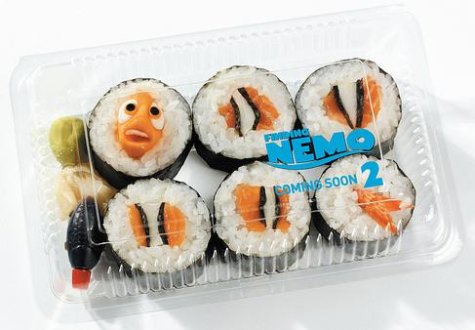
Mm, sushi.
Paging Alfred Hitchcock. Are you listening?
There’s about 100 birds in the tree outside my window. They keep fluttering from branch to branch, like they’re playing a giant game of bird freeze tag.
I’m scared.
Honorable Mention in YBFH 20
Keybones received an Honorable Mention from Ellen Datlow in the horror section of The Year’s Best Fantasy & Horror. I’m thrilled. 🙂
Apropos of nothing: RIP Myrtle the dinner roll
During my sophomore year in college, I lived in off-campus housing with six of
my friends. It was a ton of fun, but to get on to the story:
One day, Kathy made some rolls in the oven. She forgot they were in there and
went away. When she came back to the kitchen, the rolls were completely burnt.
They weren’t quite black, but they were dark brown and rock-solid. She set
them on the counter to cool, intending to throw them away when she
cleaned up the kitchen later.
I found the tray of rolls. I knocked on one, just to see how bad it was. Yep,
like rocks. I was in a mischievous mood. So I got out some paper, glue, and
markers. I made little eyes and lips for all of the burnt rolls. I glued them
on the rolls. They were awfully cute, like a burnt roll convention.
I forgot about them until that night when Janann went into
the kitchen and screamed. She yelled out, “AUGH, it’s LOOKING at me!” We all
ran in there and had a good laugh over it. Most of the rolls got thrown away,
but we kept the cutest one as a house mascot. We named her Myrtle.
Myrtle sat on the kitchen counter for six months. Eventually she was joined by
Clarice, a burnt piece of toast with no eyes or mouth. I like to think that
Myrtle helped Clarice learn to cope with the world, sort of like the Helen
Keller story of burnt baked goods. Eventually Clarice vanished, presumably
into the trash. Myrtle died a sad death, spiked in the head with a fork. It
must have been a brutal blow to pierce the toughness of her skin. Rest in
peace, Myrtle, wherever you’re decomposing.
Five things few people know about me
I’ve been tagged by the ever-talented James Maxey, a writer I know from Codex, to list five things few people know about me. This reminds me of my favorite question to ask people I’ve just met, which is, “Tell me something about yourself I’d never think to ask you.”
- 1. I sang back-up for Barry Manilow when I was in high school. He came to my hometown and requested local high-school talent for a show he was doing. He wasn’t a very nice man, at least to the back-up singers.
- 2. When I was 11, I decided that orange was a sadly neglected color and it didn’t get enough love from the world. So I decided that it would be my favorite color. It was my one small contribution to justice in the world. Actually, I didn’t really like orange. But I bought a lot of orange things, including fluorescent orange Converse shoes. I kept those shoes for 18 years, even though I grew another size and they no longer fit.
- 3. I was partly raised by my next-door neighbor, Jane Lyon. She was 76 years older than me. On Saturday afternoons, instead of playing outside like most kids, I’d go over to Jane’s house and talk to her all afternoon. Jane was a firebrand of a woman who’d run away in her youth to China. She had a garden and a barn, despite the fact that we lived in middle-suburbia. Her interior porch was also a garden room, filled with plants and exotic items from China. Many of my art projects ended up decorating her home. I never expected Jane to see me graduate high school, but in true firebrand fashion, she lived until I was well out of college. Her kids finally convinced her to go to a nursing home, where she passed away peacefully at age 98. I’m told she flirted with all the men in the home. Sounds like Jane.
- 4. I’m a modern-day temple dancer, also called meditation through movement. To put it another way, I like to listen to tribal or world-beat music and rock out. Sometimes I use recorded music, but sometimes I can find something live. When I dance myself to exhaustion, I find that quiet space at my center from which my creativity stems. This is how I worship the universe. I’m a pantheist or an atheist, or both–depending on how I feel when you ask me. I see no contradiction between the two philosophies–indeed, many don’t. Sometimes I dance with a group, most notably through the Temple Arts Institute.
- 5. I’m cautious about what I blog, because I’m convinced that within our lifetimes, the Internet will evolve so that we can read old posts as easily as we recall childhood memories. Possibly with technology implanted directly into our skulls. I’m hoping we start to clone replacement teeth too, but I’m less optimistic about that.
The best dinner of my life. Seriously.
Last night, at Nibblers. Shannon and I shared the following:
- Amuse: Dungeness crab bisque shooter with a meyer lemon crema
- First: Baked tiger shrimp in pernod with baked sweet 100 tomatoes
- Second: Wild mushroom crepes in a sercial madeira glaze with white truffle oil
- Intermezzo: Cranberry Chardonnay sorbet
- Third: Rose seared Alaskan halibut medallions with Forbidden black rice and yuzu tobiko crema
- Fromage: Rouzaire Pierre Robert soft ripened rich French triple cream, Casa Matias Serra da Estrela unctuous sweet sheep’s milk cheese, and Cowgirl Creamery Pierce Point artisan domestic triple cream rolled in wild herbs
- Sweets: Cinnamon pound cake smothered with blueberries and served with double Devon cream
- Accompanying all of the above were different wines for each flight–a progressive wine pairing.
Having four glasses of wine in front of you–one for each course–is the height of decadence. Yum, yum, yum. I’m still not sure what was so Forbidden about the rice, but hey.
Pricy, but oh so worth it.
Writer’s Liberation by Jenny Crusie
My friend Rosa Pedersen directed me to this wonderful essay. Jennifer Crusie, well-known romance novelist, discusses the parallels between getting published and getting married. A quote:
Publication, like marriage, is indeed a fine institution, but anyone who says, “My goal in writing is to be published” is making the same mistake as the woman who said, “My goal in living is to be married.” Writing and living are about us, about who we are and what we want, about satisfying our needs as individuals, about listening to our hearts. Please note, I am not saying give up publication (or marriage) entirely; I’m saying give it up as a goal.
Check out the full essay–it’s short. (“National” is the Romance Writer Association’s yearly conference.)
Mentee Q&A: choosing a point of view
Q: How do you decide when to write a story in first-person versus third? Are there aspects you consciously look for, or do you just think “that’d sound better in first person”?
A: I have a Magic 8-ball here…
Good question. You’re asking about point of view (POV).
First of all, it’s not so simple. There’s more than two choices for POV. I’ve heard as many as fourteen–but for this question, let’s stick to the four most common ones. Those are:
- First-person: “I” is the narrator. We only hear what the narrator wants to tell us about.
- Third-person (aligned): One person is the central subject. We hear his/her thoughts and opinions.
- Third-person (panoramic): Think movie camera. You see what the characters are doing, but you don’t hear any of their thoughts.
- Third-person (omniscient) You see what the characters do, and also hear different thoughts from all of them.
So, to choose what POV to use for my story, the first question I ask is, “How much information do I want to give the reader? If I want to give everyone’s thoughts, I choose third-person (omniscient). If I don’t want to give anyone’s thoughts, I choose third-person (panoramic). Easy enough.
The difference between first-person and third-person (aligned) is more subtle. I consider several different things when deciding between those two. Honestly, I think they’re more interchangeable than most people would. So you can write in whichever feels right. Indicators that first-person might work well:
- the character has an unusual voice or speech pattern that would give the story color
- the narrator is unreliable (telling the story from a skewed perspective) and you want the reader to notice the difference between events and his description
- the character’s gender or name needs to be masked for some reason
Indicators that third-person aligned might work well:
- the character is hard to identify with in some way, such as a very strange alien
- you need to offer slight perspective on the character that he would never notice himself
- the character dies at the end of the story
Those are just a few things to consider.Final words: I think most beginning writers should stick with first-person and third-person aligned. 80% of stories are perfectly fine from one of these two perspectives. If you learn to write them well, you’ll do better when you start exploring other POVs.
In particular, consider the importance of filtering the narrative through the character you’re aligned with. Make sure that you only describe things he sees and experiences. A common mistake is to have the protagonist see someone else “smile at the memory.” Nope. He can’t see that (unless maybe she’s his wife of fifty years). What he sees is her smiling–not her thoughts. It’s the job of the writer to show her in a way that the reader infers her thoughts–and then show the reader what the protagonist thinks in response.
Also, consider how your character’s experience will influence what s/he notices in the world. Consider a hotel ballroom. What’s the first thing a CIA agent would notice when he walked in? Exits and hiding places, maybe, and where he should stand to watch everyone. How about a teenage girl, at her first ball? Maybe the grand staircase, and the glittering chandelier. What about a waiter serving punch? He’d notice the layout of the buffet table, and where the clearest paths are for walking through the room. If you’re really into your character’s head, you’ll notice the same things they would. And you’ll avoid mentioning things they wouldn’t notice–the waiter, for example, wouldn’t notice the familiar chandelier unless there’s something unusual about it. The closer you can match the character’s POV, the more real that character will feel–and the better your story will be as a result.
So in conclusion: Choose the best POV to tell the story you want to tell. Regardless of which you choose, be consistent, and you’ll be fine.
 Vylar Kaftan